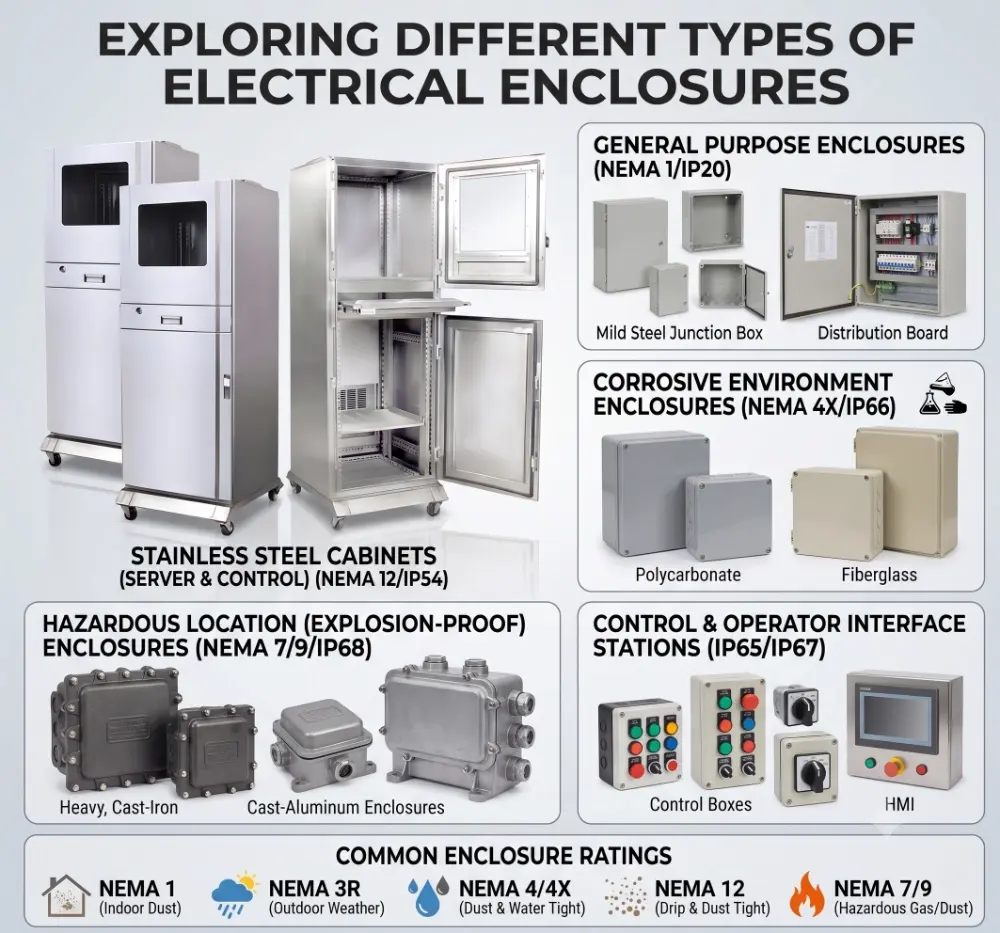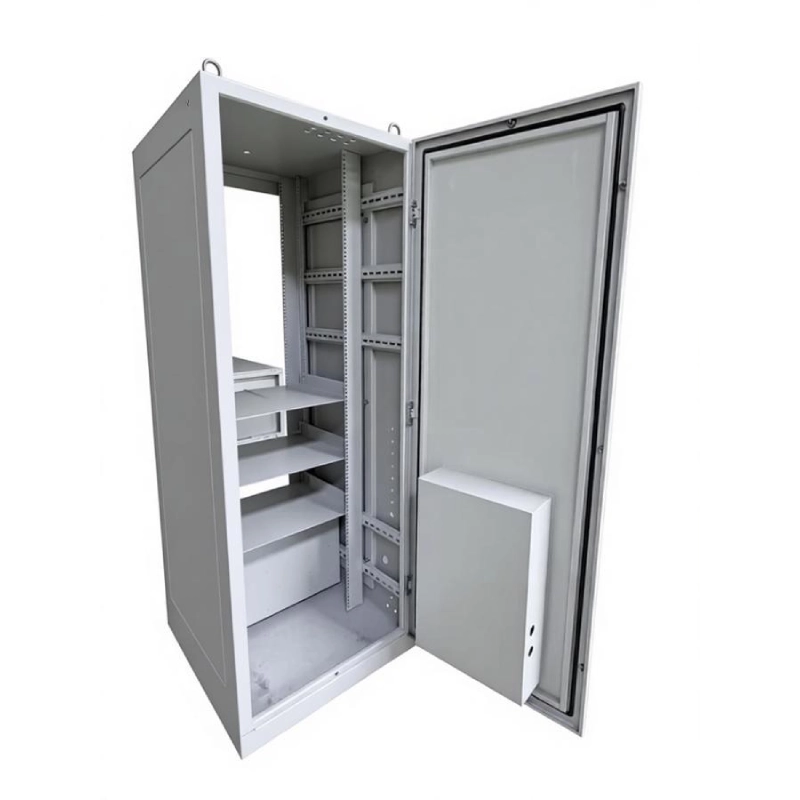


Standard Off‑the‑Shelf Enclosure VS Feature‑Oriented Custom Enclosure: Which Fits Your Complex Automation Project Budget
Release time: 2026-09-10
Table of Contents
When engineering a complex automation system—whether for a packaging line, water treatment plant, or smart warehouse—the enclosure decision often comes down to a false choice: “standard vs custom.” In reality, the right answer depends on your project’s risk profile, lifecycle cost, and how much future flexibility you need. This article breaks down when a standard industrial electrical enclosure saves money and when a feature‑oriented custom design prevents costly rework, downtime, or compliance gaps.
The Real Cost Question: Purchase Price vs Total Cost of Ownership
Most procurement teams start with unit price. A standard NEMA 12 or IP54 wall‑mount box might cost 30–50% less upfront than a custom solution. But in complex automation projects, the enclosure is not just a container—it is part of the system architecture.
Total cost of ownership (TCO) includes:
- Engineering time for cutouts, mounting plates, and cable management.
- On‑site modifications (drilling, tapping, sealing) that can void certifications.
- Downtime during retrofits when the original enclosure cannot accommodate new I/O, HMIs, or networking gear.
- Compliance risk if modifications break IP, NEMA, or hazardous area ratings.
A slightly higher upfront investment in a feature‑oriented custom enclosure can eliminate multiple rounds of field modifications and reduce lifecycle risk.
When Standard Off‑the‑Shelf Enclosures Make Financial Sense
Standard enclosures work well when:
- The environment is well‑defined and stable (e.g., indoor, low dust, no washdown).
- The control architecture is simple: a single PLC, a few drives, minimal I/O.
- Future expansion is limited or can be handled in a separate cabinet.
- Lead time is critical and you need stock items within days.
Typical use cases:
- Small machine panels in general manufacturing.
- Local junction boxes in non‑hazardous areas.
- Pilot projects or prototypes where requirements may change.
In these scenarios, a standard industrial electrical enclosure from a reputable supplier provides a cost‑effective, code‑compliant solution with minimal engineering overhead.
When Feature‑Oriented Custom Enclosures Pay for Themselves
Custom enclosures become financially attractive when:
- The automation system is complex: multiple PLCs, drives, safety relays, and network switches in one panel.
- The environment is harsh: corrosive chemicals, frequent washdown, extreme temperatures, or outdoor exposure.
- Operator interfaces (HMIs, touchscreens, mobile consoles) must be integrated directly into the enclosure.
- Future upgrades are expected, and you want to avoid re‑certification or major rework.
Feature‑oriented custom designs can include:
- Pre‑machined cutouts for specific HMIs, scanners, or barcode readers.
- Internal mounting rails, DIN channels, and cable trays sized for your exact BOM.
- Integrated cooling (fans, heat exchangers) or heating for temperature control.
- Custom door configurations, viewing windows, or lockable access for security.
For large EPC projects or multi‑year rollouts, the reduction in field engineering and change orders often justifies the higher initial cost.
Decision Matrix: Standard vs Custom by Project Type and Risk Level
| Project Type | Environment | Complexity | Future Expansion | Recommended Approach |
|---|---|---|---|---|
| Small machine panel | Indoor, clean | Low | Low | Standard industrial electrical enclosure |
| Packaging line control cabinet | Indoor, moderate dust | Medium | Medium | Standard with minor custom cutouts |
| Water treatment PLC room | Outdoor, humid | Medium‑High | High | Custom stainless steel electrical box |
| Food & beverage washdown area | Frequent high‑pressure | Medium | Medium | Custom IP66/69K stainless enclosure |
| Mobile HMI station | Moving, operator‑facing | High | High | Custom mobile lcd console computer cabinet |
| Hazardous area control panel | Gas/dust zones | High | Medium‑High | Custom certified hazardous enclosure |
This matrix helps align enclosure strategy with project risk and budget constraints.
Material and Form Factor: Stainless Steel Electrical Box and Beyond
Material selection is one of the biggest TCO drivers. Common options:
- Powder‑coated carbon steel: Cost‑effective for indoor, non‑corrosive environments.
- Stainless steel (304/316): Essential for corrosive, washdown, or outdoor applications.
- Aluminum: Lightweight, good for general industrial use, but less chemical‑resistant.
- Polycarbonate or fiberglass: Non‑metallic options for specific chemical or EMI requirements.
A stainless steel electrical box may cost 2–3× more than carbon steel upfront, but in corrosive environments it can last 3–5× longer with less maintenance. For food, pharma, chemical, and offshore applications, stainless is often the only viable option.
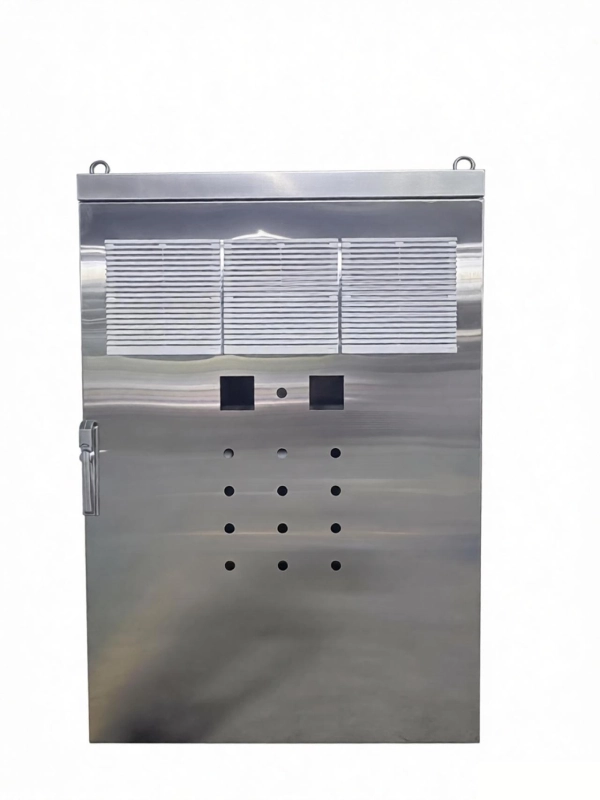
Form factors also matter:
- Wall‑mount vs floor‑stand vs freestanding console.
- Single‑door vs multi‑door vs split‑level designs.
- Integrated work surfaces or keyboard trays for operator stations.
Matching form factor to workflow reduces ergonomic risk and improves operator efficiency.
Special Cases: Mobile LCD Console Computer Cabinet and Operator Stations
Mobile operator stations are a growing segment in smart factories and warehouses. These units combine computing, HMI, and sometimes barcode/RFID scanners into a single movable console. A standard enclosure rarely fits these needs.
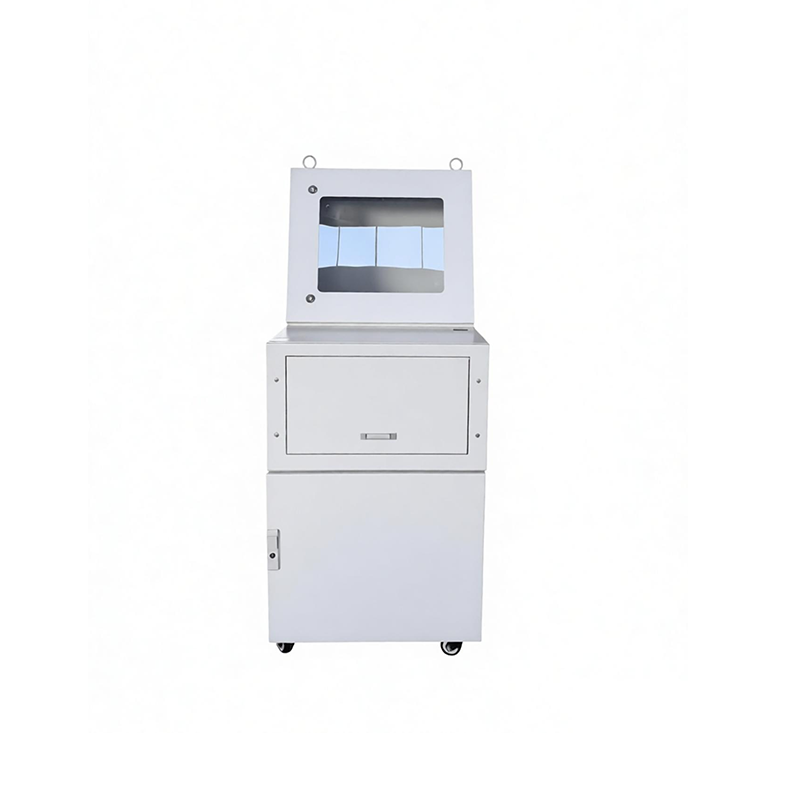
A mobile lcd console computer cabinet typically requires:
- Integrated mounting for LCD panels (15″–24″) with tilt/swivel adjustments.
- Internal space for mini‑PC, UPS, and network switches.
- Cable management for power, Ethernet, and peripheral devices.
- Lockable casters, handles, and sometimes battery compartments.
- IP54 or higher protection if used in semi‑harsh environments.
Building this as a custom solution ensures that all components fit securely, cables are protected, and the unit meets safety and ergonomic standards. Attempting to adapt a standard box often leads to fragile mounts, poor cable routing, and higher failure rates.
Integration, Lead Time, and Change Management: Hidden Budget Drivers
Two often‑overlooked budget factors are integration effort and change management.
Integration effort includes:
- Time spent designing internal layouts, drilling holes, and installing glands.
- Risk of errors that require rework or replacement.
- Potential voiding of IP/NEMA ratings due to unapproved modifications.
Change management becomes critical when:
- The automation scope expands mid‑project (additional I/O, new network segments).
- Operator interfaces change (larger HMI, additional scanners).
- Environmental conditions are reassessed (e.g., new washdown requirements).
Custom enclosures designed with future changes in mind—extra gland plates, spare cutouts, modular internal frames—reduce the cost and risk of these changes. Standard enclosures often require complete replacement when requirements shift.
Lead Time and Availability: Quick Wins vs Strategic Investments
| Factor | Standard Enclosure | Custom Enclosure |
|---|---|---|
| Typical Lead Time | 1–7 days (stock items) | 2–6 weeks (design + fabrication) |
| Engineering Effort | Low (select from catalog) | Medium‑High (spec review, CAD, approval) |
| Modification Risk | High (field mods may void ratings) | Low (pre‑engineered to spec) |
| Future Flexibility | Low | High |
| Best For | Urgent, simple, low‑risk projects | Complex, multi‑year, high‑risk projects |
For urgent, low‑complexity tasks, standard enclosures are unbeatable. For strategic automation rollouts, the lead time investment in custom design pays off in reduced risk and lower TCO.
How to Structure Your Enclosure Spec to Avoid Over‑ or Under‑Engineering
A well‑structured enclosure spec prevents both overspending and under‑protection. Key elements to include:
- Environmental requirements: IP/NEMA rating, temperature range, corrosion class, hazardous area zone (if applicable).
- Dimensions and form factor: External envelope limits, mounting style, door configuration.
- Internal layout: DIN rail spacing, mounting plate thickness, cable entry points, grounding scheme.
- Cutouts and accessories: HMI sizes, scanner ports, fan/vent locations, lock types.
- Material: Carbon steel, stainless steel electrical box, aluminum, or non‑metallic.
- Certifications: UL, CE, ATEX/IECEx (if needed), food‑grade compliance.
- Future expansion: Spare gland plates, extra internal space, modular frames.
For mobile operator stations, explicitly call out requirements for a mobile lCD console computer cabinet, including display size, load capacity, caster type, and cable management.
Sharing this spec with multiple suppliers allows you to compare not just price, but engineering quality, documentation, and long‑term support. The goal is not the cheapest enclosure, but the one that minimizes total project risk and cost over its lifecycle.
Making the Budget Decision with Confidence
The choice between standard and custom enclosures is not binary. Many projects benefit from a hybrid approach: standard industrial electrical enclosure units for simple sub‑panels, combined with custom stainless steel electrical box solutions for main control rooms or harsh environments, and purpose‑built mobile lcd console computer cabinet stations for operator interfaces.
By mapping your project’s complexity, environmental risks, and future expansion plans against the decision matrices above, you can justify the enclosure budget to stakeholders with clear TCO logic rather than just unit price. That is how complex automation projects stay on schedule, on spec, and on budget.