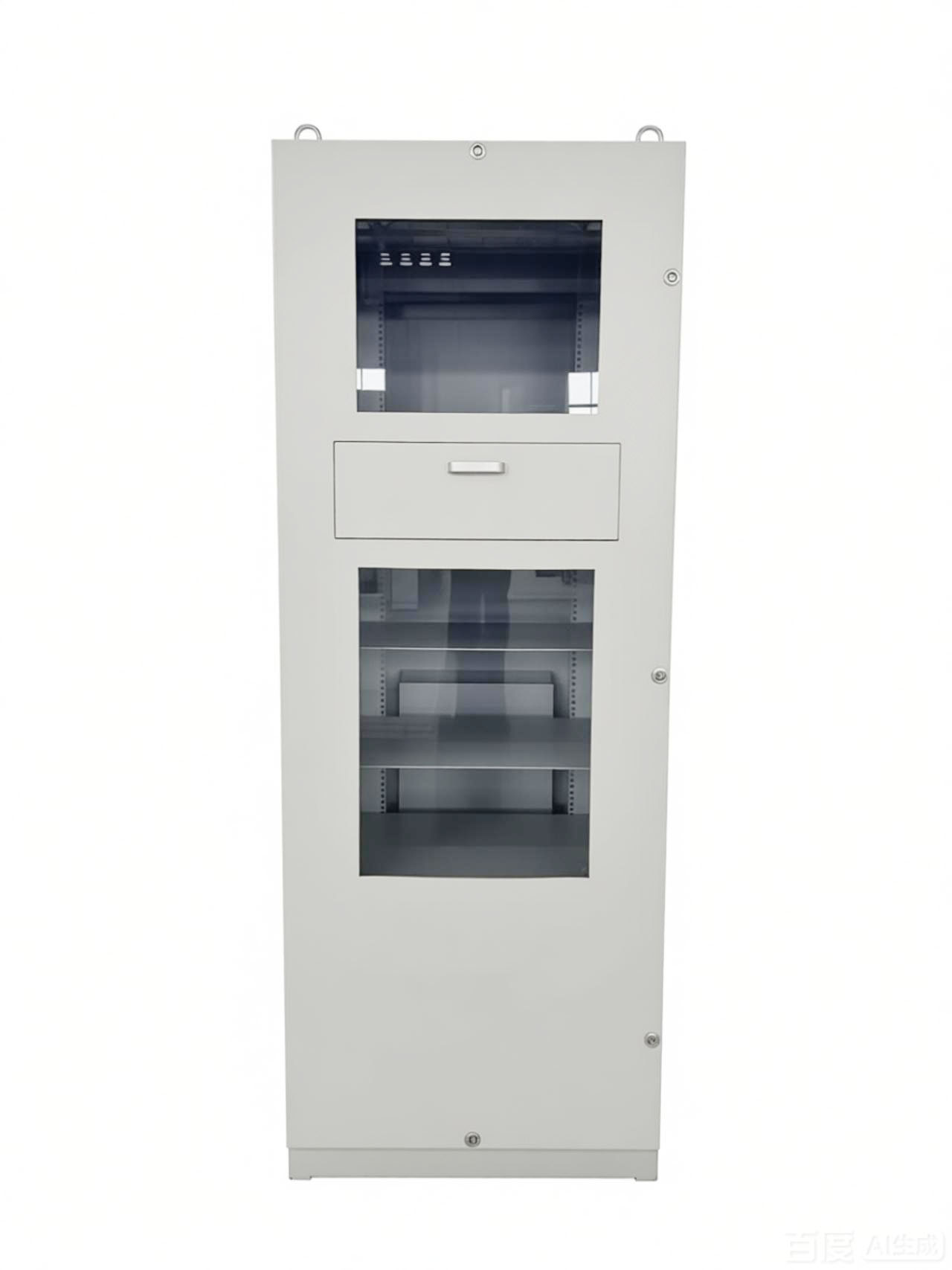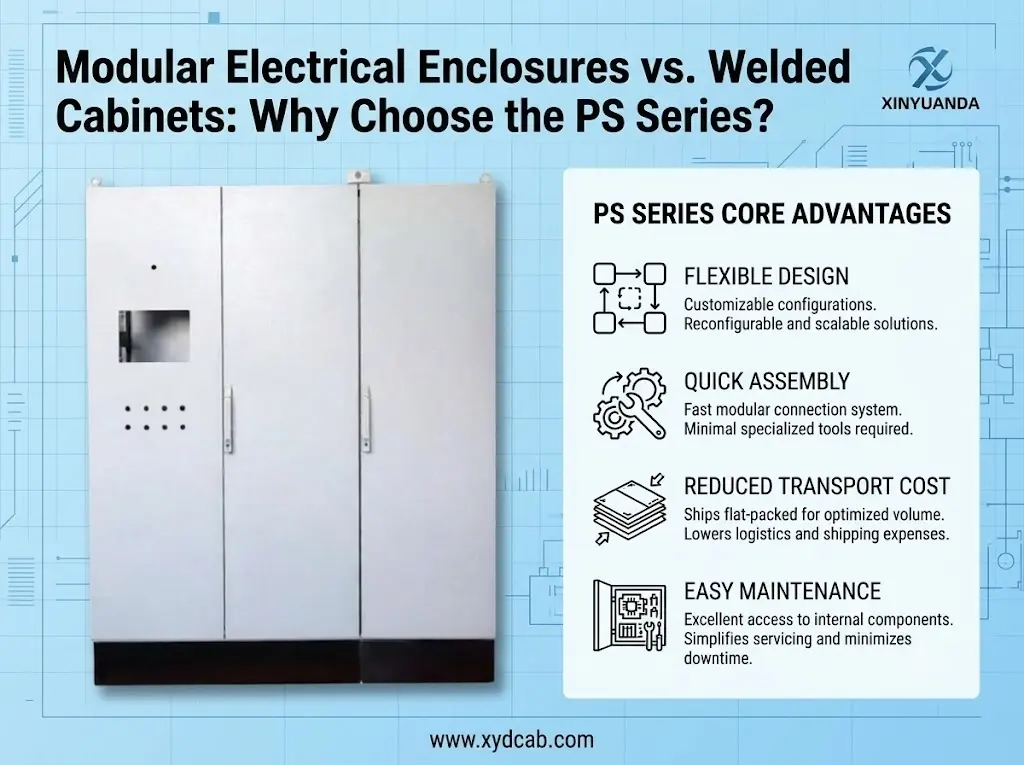


How to Configure Explosion‑Proof Electrical Cabinet for Flexible PLC Upgrade in Gas‑Dual‑Risk Hazardous Areas
Release time: 2026-09-04
Inhaltsverzeichnis
Upgrading a PLC control system can significantly improve automation, monitoring, and process efficiency. However, PLC upgrades in hazardous industrial environments require much more than replacing an old controller with a newer model. When a facility faces both flammable gas and combustible dust risks, the electrical enclosure must provide reliable protection while allowing sufficient flexibility for control-system modifications.
An appropriately configured explosion-proof electrical cabinet can provide a controlled environment for PLCs, power supplies, communication components, terminals, and other electrical equipment. For plants operating in chemical processing, oil and gas, pharmaceutical manufacturing, grain handling, and other hazardous industries, cabinet selection should therefore be treated as an important part of the overall PLC upgrade strategy.
Why PLC Upgrades Are More Complex in Dual-Risk Hazardous Areas
In an ordinary industrial environment, engineers can focus primarily on PLC compatibility, I/O capacity, communication protocols, and cabinet space. Hazardous areas introduce another layer of requirements.
Flammable gases or vapors may form an explosive atmosphere around electrical equipment. Combustible dust can create another type of ignition hazard, particularly where dust accumulates on surfaces or enters electrical equipment. When both risks may occur within the same facility or process area, the enclosure and electrical components must be selected according to the applicable hazardous-area classification.
This makes a flexible PLC upgrade challenging. The new system may require additional I/O modules, network switches, relays, power supplies, or communication interfaces, while the enclosure still needs to maintain its required protection characteristics.
A properly designed explosionsgeschütztes elektrisches Gehäuse helps engineers balance these competing requirements by providing mechanical protection and a controlled installation space for the automation system.
1. Start With the Hazardous-Area Classification
Before selecting an electrical cabinet, determine exactly where the PLC system will be installed and what hazardous substances may be present.
For gas hazards, engineers typically need to consider the type of flammable gas or vapor, its likelihood of occurrence, and the applicable zone or division classification. For combustible dust, the dust type, particle characteristics, accumulation potential, and hazardous-area classification should also be evaluated.
If gas and dust risks are both present, the cabinet configuration should not be based on the assumption that one protection method automatically addresses every hazard. The final design should comply with the regulations and certification requirements applicable to the installation location.
This assessment also determines the appropriate enclosure construction, cable entry method, equipment certification, grounding arrangement, and other design parameters.
2. Choose the Cabinet Around the PLC Upgrade Architecture
A common mistake is selecting the enclosure based only on the dimensions of the existing PLC. A flexible upgrade requires sufficient room for future expansion.
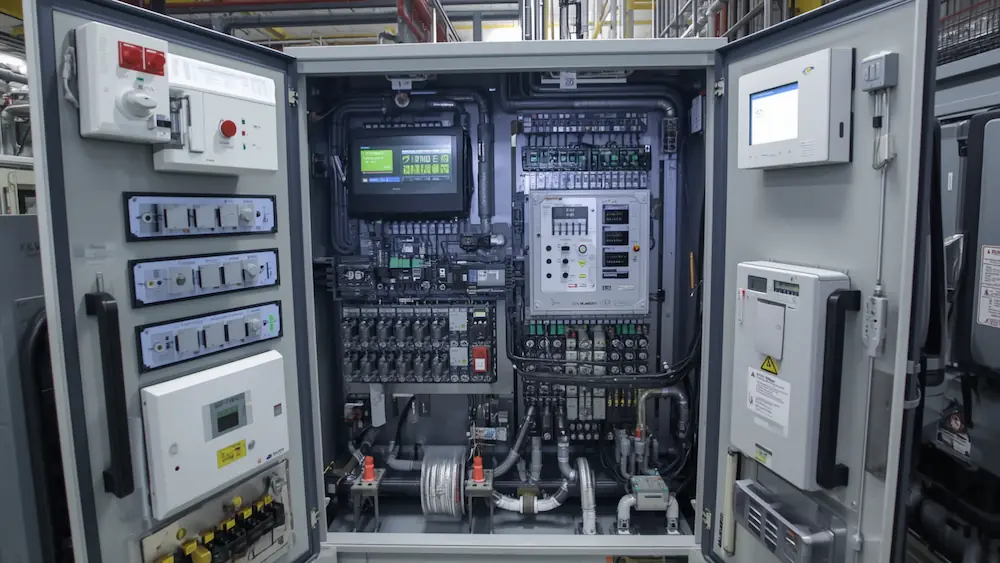
The cabinet should accommodate the PLC CPU, I/O modules, power supplies, terminal blocks, circuit protection, communication equipment, and wiring accessories without creating excessive crowding. Engineers should also reserve space for additional modules that may be introduced later.
For this reason, an explosion-proof control cabinet should be specified according to the complete system architecture rather than a single PLC model.
For example, if an existing control system uses a compact PLC but the upgraded system will add remote I/O and industrial Ethernet communication, the enclosure may need additional mounting space and cable routing capacity. Planning for these changes during cabinet design can reduce the need for major modifications later.
3. Consider Heat Dissipation and Internal Temperature
PLC equipment, power supplies, relays, and communication devices generate heat during operation. In a sealed or explosion-protected cabinet, heat management becomes particularly important.
The enclosure should be evaluated according to the expected internal heat load, ambient temperature, installation location, and operating duty cycle. Simply adding conventional ventilation components may not be suitable for a hazardous area because they can affect the protection concept of the enclosure.
Engineers should therefore determine whether the selected cabinet requires an appropriate cooling solution or whether the internal layout can maintain acceptable operating temperatures without compromising hazardous-area protection.
Component spacing is also important. PLC modules and power supplies should not be packed tightly together, particularly when they generate significant heat. Proper internal organization can improve thermal performance while making maintenance easier.
4. Plan Cable Entries for Flexible Modification
PLC upgrades often involve changes to field wiring, communication cables, sensors, actuators, and power connections. Cable entry is therefore one of the most important details when configuring a hazardous-area cabinet.
Cable glands, conduit entries, and sealing components should be compatible with the cabinet’s protection method and the hazardous-area requirements. Unused openings must also be properly sealed.
For a flexible system, it is useful to establish a logical separation between power, control, and communication wiring. This can simplify troubleshooting and reduce electromagnetic interference.
A well-designed explosion-proof electrical cabinet should also provide an organized cable management solution so that future PLC modifications can be completed without unnecessarily disturbing existing wiring.
5. Separate Power and Control Functions Where Appropriate
A PLC cabinet may contain both low-voltage control electronics and higher-power electrical components. Combining everything without a clear layout can make maintenance more difficult and increase the potential for electrical interference.
During configuration, engineers should consider the physical separation of power supplies, circuit protection, PLC modules, terminal blocks, communication equipment, and other components.
The exact arrangement depends on the system design, but a practical cabinet layout normally aims to:
- Keep high-power components away from sensitive communication electronics.
- Provide clear access to PLC modules and terminals.
- Maintain appropriate spacing between components.
- Create logical cable routing paths.
- Make inspection and maintenance easier.
- Leave room for future PLC expansion.
This approach is particularly useful when the upgrade is expected to be performed in stages rather than through a complete replacement.
6. Verify Enclosure Materials and Mechanical Construction
The cabinet material should be selected according to the operating environment. Chemical exposure, humidity, salt spray, dust, outdoor installation, mechanical impact, and temperature fluctuations can all affect long-term enclosure performance.
Stainless steel may be appropriate for corrosive or hygienic environments, while other applications may use specially selected metal constructions depending on the required protection and installation conditions.
Mechanical strength is equally important. Doors, hinges, locking mechanisms, mounting plates, cable entries, and enclosure joints should be designed as part of the complete protection system rather than treated as independent accessories.
For facilities where routine PLC upgrades are expected, the cabinet should also provide practical access to internal components while maintaining its required protective characteristics when closed.
7. Check Certification and Component Compatibility
An explosion-protected cabinet is not simply a standard electrical box with a PLC installed inside it. The protection concept and certification requirements must be considered for the complete assembly.
Before purchasing, engineers should verify the relevant certification information, hazardous-area suitability, enclosure protection level, temperature limitations, and compatibility of installed components.
The PLC itself, terminals, cable glands, switches, displays, relays, and other electrical components may have their own certification requirements. Their installation must not invalidate the protective characteristics of the enclosure.
This is especially important for flexible PLC upgrades because replacing one component with a different model can affect heat generation, wiring arrangements, space requirements, or certification conditions.
8. Build Flexibility Into the Initial Cabinet Design
A successful PLC upgrade should not only solve today’s automation requirements. It should make future changes easier.
One practical strategy is to use a modular internal mounting arrangement. DIN rails, mounting plates, terminal sections, and clearly organized wiring channels can make it easier to add or replace components.
Another strategy is to reserve spare terminals and installation space. A small amount of additional cabinet capacity can significantly simplify future expansion.
Xinyuanda focuses on industrial electrical enclosure solutions, including explosion-proof electrical cabinets designed for applications where electrical equipment requires enhanced protection. For PLC modernization projects, cabinet configuration can be adapted around the control architecture, component arrangement, cable entry requirements, and operating environment.
9. Think About Maintenance Before Commissioning
Maintenance access should be considered during the initial cabinet design rather than after installation.
Technicians may need to inspect terminals, replace PLC modules, check power supplies, troubleshoot communication equipment, or identify wiring faults. A crowded cabinet can increase maintenance time and create unnecessary risks.
Clear component labeling, organized wiring, accessible terminals, and adequate internal space can all improve serviceability.
For hazardous locations, maintenance procedures must also follow the applicable site safety requirements. Equipment should not be opened or modified in a hazardous atmosphere unless the relevant procedures specifically permit it.
Match the Cabinet to the Entire Automation System
Configuring an explosion-protected cabinet for a PLC upgrade requires coordination between hazardous-area requirements and automation engineering. The key considerations include area classification, enclosure protection, PLC architecture, heat dissipation, cable entries, internal layout, component compatibility, materials, certification, and future expansion.
Instead of treating the cabinet as a passive housing, engineers should consider it an integral part of the control system. This is particularly important when the installation combines gas and combustible-dust risks and when the PLC platform needs to remain flexible for future upgrades.
For projects requiring a customized explosion-proof control cabinet, Xinyuanda can provide enclosure solutions based on the electrical configuration and application requirements. Selecting the cabinet together with the PLC architecture from the beginning can help create a safer, more maintainable, and more adaptable control system for demanding hazardous industrial environments.